
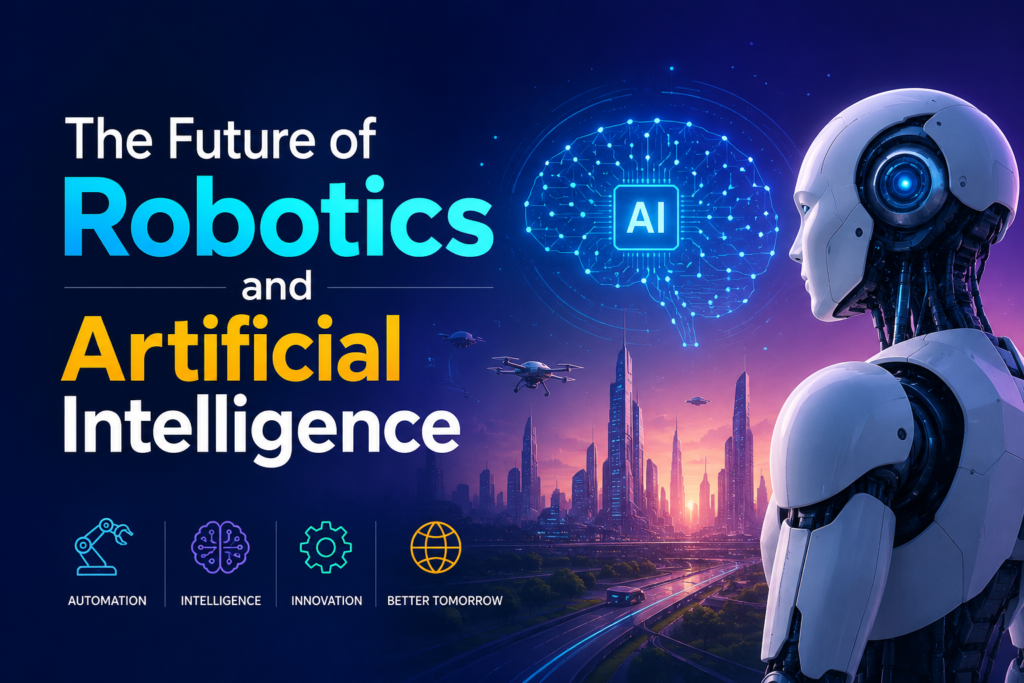

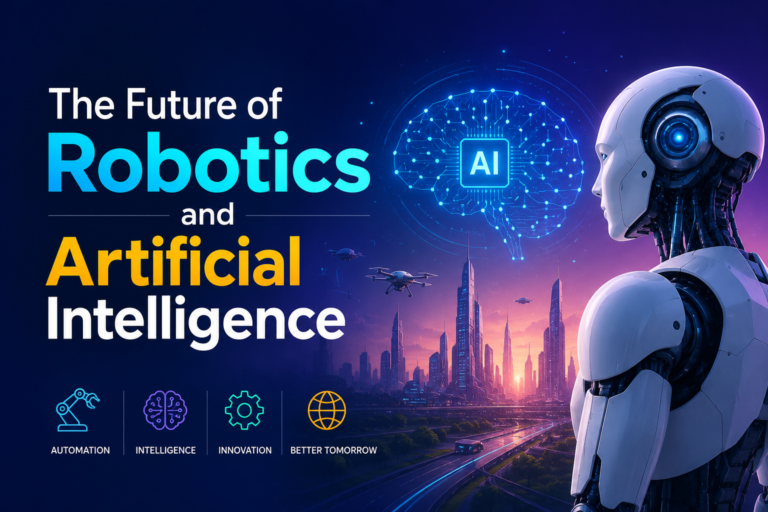
The Future of Robotics and Artificial Intelligence
Artificial Intelligence (AI) and robotics are rapidly transforming the way people live, work, and interact with technology. What once seemed like science fiction is now becoming a reality, with intelligent robots assisting in healthcare, manufacturing, logistics, education, and even household tasks. According to the International Federation of Robotics (IFR), more than 4 million industrial robots are currently operating in factories worldwide. At the same time, AI advancements are enabling machines to learn, adapt, and make decisions with minimal human intervention.
Businesses are investing heavily in autonomous systems to improve productivity, reduce costs, and address labor shortages. Meanwhile, researchers continue to push the boundaries of what machines can achieve. This article explores the technologies, opportunities, challenges, and future trends shaping the next generation of intelligent machines.
How Robotics and Artificial Intelligence Work Together
Robotics and Artificial Intelligence are often discussed together because they complement each other in powerful ways. Robotics focuses on creating machines that can perform physical tasks, while AI provides the intelligence needed for those machines to understand information, make decisions, and adapt to changing environments. Without AI, robots simply follow pre-programmed instructions. With AI, they can learn from data, recognize patterns, and respond intelligently to new situations. This combination is driving innovation across industries, making machines more capable, efficient, and valuable than ever before in both commercial and consumer applications.
What Is Robotics?
Robotics is a multidisciplinary field that combines engineering, electronics, computer science, and mechanical design to create machines capable of performing specific tasks. Robots can be programmed to carry out repetitive, dangerous, or highly precise activities. They are widely used in industries such as manufacturing, healthcare, agriculture, logistics, and space exploration to improve efficiency and safety.
What Is Artificial Intelligence?
AI enables machines to learn from data, recognize patterns, solve problems, and make decisions. Technologies such as machine learning, deep learning, and natural language processing help AI systems improve their performance over time without requiring constant human programming or intervention.
How AI Powers Modern Robots
AI serves as the brain of modern robots, allowing them to process information from sensors, cameras, and other devices. By analyzing real-time data, AI-powered robots can recognize objects, navigate environments, avoid obstacles, and perform complex tasks. This intelligence helps robots operate more effectively in dynamic situations where traditional automation may struggle.
The Evolution of Intelligent Machines
The journey from basic mechanical machines to intelligent robots has taken decades of innovation. Early robots were limited to fixed instructions and repetitive actions. Today’s robots can learn from experience, adapt to changing conditions, and interact with humans naturally. Advances in computing power, cloud technology, and AI algorithms continue to accelerate this evolution.
💚 You might also like: Top Trending Products to Sell Online in 2026
Key Technologies Driving the Future of AI Robotics
Several breakthrough technologies are fueling the rapid growth of AI-powered robotics. These innovations enable robots to perceive their surroundings, process information, and make intelligent decisions. Machine learning allows robots to improve through experience, while computer vision helps them understand visual data. Natural language processing enables communication with humans, and cloud computing provides access to massive processing power. Generative AI is also opening new possibilities by helping robots solve problems creatively and adapt to unfamiliar situations. Together, these technologies are creating smarter, more autonomous systems capable of transforming industries and everyday life.
Machine Learning and Deep Learning
Machine learning enables robots to learn from data and improve performance without explicit programming. Deep learning, a subset of machine learning, uses neural networks to process large amounts of information. These technologies help robots recognize patterns, make predictions, and perform tasks with increasing accuracy as they gain more experience.
Computer Vision Systems
Computer vision allows robots to interpret and understand visual information from cameras and sensors. This technology helps robots identify objects, recognize faces, detect defects, and navigate complex environments. Advances in computer vision have significantly improved robotic accuracy in industries such as healthcare, manufacturing, retail, and autonomous transportation.
Natural Language Processing (NLP)
Natural Language Processing enables robots and AI systems to understand and respond to human language. NLP powers voice assistants, chatbots, and customer service robots. By interpreting speech and text, robots can communicate more naturally with people, improving user experiences and making technology more accessible for everyday interactions.
Generative AI and Large Language Models
Generative AI and Large Language Models are expanding the capabilities of intelligent robots. These systems can generate text, analyze information, and assist with decision-making. By integrating generative AI, robots can handle more complex tasks, provide personalized responses, and adapt to new scenarios without requiring extensive reprogramming.
Edge AI and Cloud Robotics
Edge AI processes data directly on devices, reducing latency and improving response times. Cloud robotics, on the other hand, allows robots to access powerful computing resources remotely. Combining these technologies enables robots to perform real-time actions while benefiting from advanced analytics, large datasets, and continuous software improvements.
How AI-Powered Robots Are Transforming Industries
AI-powered robots are revolutionizing industries by improving efficiency, accuracy, and scalability. Organizations are increasingly using intelligent automation to reduce operational costs and meet growing demand. According to McKinsey, automation technologies could contribute trillions of dollars to the global economy over the coming decades. From smart factories and robotic surgery to precision agriculture and customer service automation, robots are becoming essential business tools. Their ability to operate continuously, analyze large amounts of data, and perform tasks with exceptional precision makes them valuable assets in a highly competitive and technology-driven world.
Manufacturing and Smart Factories
Manufacturing remains one of the largest users of robotics technology. AI-powered robots handle assembly, welding, packaging, and quality inspection with remarkable accuracy. Smart factories use connected robotic systems to optimize production processes, reduce downtime, and improve product quality while lowering operational costs and increasing overall efficiency.
Healthcare and Robotic Surgery
Healthcare is benefiting significantly from robotic innovation. Surgical robots assist doctors with complex procedures that require precision and control. AI-powered systems can also analyze medical data, support diagnoses, and improve patient care. These technologies help healthcare providers deliver better outcomes while reducing the risk of human error.
Logistics and Supply Chain Automation
Warehouses and distribution centers increasingly rely on AI-powered robots to manage inventory, sort packages, and fulfill orders. Companies use autonomous mobile robots to improve efficiency and speed. These systems help businesses meet customer expectations while reducing labor costs and improving overall supply chain performance.
Agriculture and Precision Farming
Farmers are adopting robotics and AI to improve crop management and increase productivity. Autonomous tractors, robotic harvesters, and AI-driven monitoring systems help optimize farming operations. These technologies enable precision agriculture by analyzing soil conditions, weather patterns, and crop health, leading to higher yields and reduced waste.
Retail and Customer Service
Retail businesses are using AI-powered robots for inventory management, customer assistance, and personalized shopping experiences. Service robots can answer questions, guide customers, and automate routine tasks. By improving operational efficiency and customer satisfaction, robotics is helping retailers adapt to changing consumer expectations and market demands.
💚 You might also like: https://aimastars.com/ai-powered-threat-detection-systems/
The Rise of Autonomous and Self-Learning Robots
One of the most exciting developments in robotics is the emergence of autonomous and self-learning robots. Unlike traditional machines that rely on fixed instructions, these advanced systems can learn from experience, adapt to new environments, and improve their performance over time. AI algorithms allow robots to process large amounts of data and make intelligent decisions without constant human supervision. This capability is transforming industries that require flexibility and rapid problem-solving. As technology advances, autonomous robots are expected to play an even greater role in transportation, healthcare, logistics, manufacturing, and everyday life.
What Makes a Robot Autonomous?
An autonomous robot can perform tasks and make decisions without direct human control. It uses sensors, cameras, GPS, and AI algorithms to understand its surroundings and respond accordingly. These robots can navigate environments, avoid obstacles, and complete objectives independently, making them highly valuable in dynamic and unpredictable situations.
Reinforcement Learning in Robotics
By receiving rewards for successful actions and penalties for mistakes, robots gradually improve their performance. This approach has enabled breakthroughs in robotic movement, navigation, object handling, and autonomous decision-making across various industries.
Real-Time Decision Making
Modern robots must process information instantly to operate effectively. AI-powered systems analyze sensor data, evaluate multiple possibilities, and make decisions within milliseconds. Real-time decision making is especially important in autonomous vehicles, healthcare applications, and industrial automation, where quick responses can significantly impact safety and efficiency.
Adaptive Behavior and Continuous Learning
Continuous learning enables robots to improve their capabilities over time. Instead of relying solely on pre-programmed instructions, they can adapt based on new experiences and changing environments. This adaptability allows robots to handle unexpected challenges more effectively and maintain high performance in complex operational settings.
Human-Robot Collaboration in the Future Workplace
The future workplace will increasingly involve collaboration between humans and intelligent machines. Rather than completely replacing workers, many robots are designed to assist people by handling repetitive, physically demanding, or hazardous tasks. These collaborative robots, often called cobots, improve productivity while allowing employees to focus on higher-value activities. According to industry research, businesses that successfully combine human expertise with robotic automation often achieve greater efficiency and innovation. As organizations embrace digital transformation, human-robot collaboration will become a critical component of modern workforce strategies across multiple sectors.
Understanding Collaborative Robots (Cobots)
Collaborative robots are designed to work safely alongside humans. Unlike traditional industrial robots that operate within restricted areas, cobots can share workspaces with employees
Benefits of Human-AI Teamwork
Human-AI collaboration combines the strengths of both parties. Humans provide creativity, emotional intelligence, and strategic thinking, while AI delivers speed, accuracy, and data-driven insights. Together, they can solve problems more efficiently, improve decision-making, and achieve better outcomes across a wide range of industries and professions.
Workplace Safety and Efficiency
Robots can significantly improve workplace safety by performing dangerous tasks that expose workers to risks. In manufacturing, construction, and mining, robotic systems help reduce accidents while maintaining consistent productivity. Their precision and reliability also minimize errors, leading to higher-quality outputs and improved operational efficiency.
New Job Roles Created by AI Robotics
Although automation may replace certain routine jobs, it is also creating new career opportunities. Roles such as robotics engineers, AI specialists, automation consultants, and machine learning experts are increasingly in demand. Businesses need skilled professionals who can develop, manage, and optimize advanced robotic systems.
💚 You might also like: https://aimastars.com/best-ai-coding-assistants-2026/
Emerging Robotics and AI Trends Shaping the Next Decade
The next decade is expected to bring significant advancements in robotics and AI. Researchers and technology companies are developing smarter, more capable systems that can operate in increasingly complex environments. Trends such as humanoid robots, swarm intelligence, AI-powered IoT networks, and physical AI are gaining momentum. Investments in these technologies continue to grow as businesses seek innovative solutions to improve efficiency and competitiveness. These emerging developments have the potential to reshape industries, transform urban infrastructure, and create entirely new opportunities for economic growth and technological progress.
Humanoid Robots
Advances in AI, motion control, and sensor technology are making these robots more capable than ever. They are expected to assist in customer service, healthcare, education, and domestic environments where human-like interaction can provide significant value.
Physical AI and Embodied Intelligence
Physical AI combines advanced artificial intelligence with real-world robotic systems. Rather than existing solely in software, AI gains the ability to interact with physical environments. This concept enables robots to understand context, manipulate objects, and perform complex tasks with greater efficiency and adaptability.
Swarm Robotics
Swarm robotics involves multiple robots working together as a coordinated group. Inspired by natural systems such as ant colonies and bee swarms, these robots communicate and collaborate to complete tasks efficiently. Swarm robotics has potential applications in disaster response, agriculture, logistics, and environmental monitoring.
AI-IoT-Robotics Integration
The integration of AI, robotics, and the Internet of Things creates highly connected intelligent systems. Sensors collect real-time data, AI analyzes information, and robots perform actions automatically. This combination enables smarter decision-making, predictive maintenance, and optimized operations across industries and smart city infrastructures.
Smart Cities Powered by Autonomous Systems
Smart cities are increasingly using autonomous technologies to improve transportation, energy management, public safety, and infrastructure maintenance. AI-powered robots and connected systems help city administrators monitor resources, reduce waste, and enhance quality of life while supporting sustainable urban development initiatives.
Challenges and Risks of Advanced AI Robotics
Despite their enormous potential, AI-powered robots present important challenges and risks. Ethical concerns, privacy issues, cybersecurity threats, and regulatory uncertainties continue to spark debate among policymakers, researchers, and business leaders. Organizations must ensure that AI systems operate transparently, fairly, and safely. Addressing these concerns is essential for building public trust and maximizing the long-term benefits of robotic innovation. Responsible development practices will play a crucial role in shaping the future of intelligent automation.
Ethical Concerns and Bias
AI systems learn from data, which means they can inherit biases present in training datasets. These biases may lead to unfair outcomes or discriminatory decisions. Developers must implement rigorous testing and ethical guidelines to ensure AI-powered robots operate fairly and responsibly in all environments.
Privacy and Data Security
Many intelligent robots collect large amounts of data through cameras, microphones, and sensors. Protecting this information is critical to maintaining privacy and preventing unauthorized access. Strong cybersecurity measures are necessary to safeguard sensitive data and reduce the risk of cyberattacks.
Reliability and Safety Issues
Robots operating in real-world environments must maintain high levels of reliability and safety. Hardware failures, software bugs, and unexpected situations can create risks. Engineers continuously develop safeguards, testing procedures, and monitoring systems to ensure robots perform tasks safely and consistently.
Regulatory and Legal Challenges
Governments and regulatory bodies are still developing frameworks to address the growing use of AI robotics. Legal questions involving liability, privacy, safety, and ethical accountability remain unresolved in many regions. Clear regulations will be essential for supporting innovation while protecting public interests.
💚 You might also like: https://aimastars.com/ai-agents-vs-chatbots/
The Impact of Robotics and AI on Jobs and Society
The growing adoption of robotics and AI is reshaping labor markets and society as a whole. While automation increases efficiency and creates economic opportunities, it also raises concerns about job displacement. According to the World Economic Forum, technological advancements are expected to create millions of new jobs while transforming existing roles. The overall impact will depend on how businesses, governments, and educational institutions prepare workers for the future. By investing in reskilling and lifelong learning, societies can ensure that technological progress benefits both individuals and organizations in the years ahead.
Will Robots Replace Human Workers?
Robots are likely to automate many repetitive and predictable tasks, but complete replacement of human workers remains unlikely. Human creativity, emotional intelligence, leadership, and critical thinking are difficult to replicate. Instead, many jobs will evolve as workers collaborate more closely with intelligent technologies.
Industries Most Likely to Be Automated
Manufacturing, logistics, retail, transportation, and customer service are among the industries most affected by automation. Tasks involving routine processes and structured workflows are particularly suitable for robotic systems. However, automation also creates opportunities for innovation and business growth.
Reskilling and Workforce Adaptation
As technology changes workplace requirements, employees must continuously develop new skills. Training programs focused on AI, robotics, data analysis, and digital literacy can help workers remain competitive. Reskilling initiatives will play a critical role in supporting successful workforce transitions.
Economic and Social Implications
Automation has the potential to increase productivity and economic growth while reducing operational costs. However, it may also contribute to workforce disruptions if adaptation efforts are insufficient. Policymakers, educators, and business leaders must collaborate to ensure technology benefits society broadly and equitably.
What Will Robotics and Artificial Intelligence Look Like by 2035?
By 2035, robotics and AI are expected to become deeply integrated into daily life. Intelligent machines will likely assist with healthcare, education, transportation, household management, and countless business operations. Advances in computing power, machine learning, and robotics hardware will enable more capable and affordable systems. Industry experts predict that robots will become increasingly autonomous, adaptable, and collaborative. While challenges remain, ongoing innovation is accelerating progress toward a future where intelligent machines work seamlessly alongside humans to solve complex problems and improve quality of life.
Future Predictions from Industry Experts
Experts believe AI-powered robotics will continue expanding across industries. Improvements in computing, automation, and machine learning are expected to create more versatile and capable systems. Many researchers anticipate significant progress in autonomous decision-making, robotic dexterity, and human-machine collaboration over the next decade.
Smart Homes and Personal Robots
Personal robots may become common household assistants capable of managing daily chores, monitoring home security, and providing companionship. Advances in AI will enable these systems to understand user preferences and adapt to individual needs, creating more personalized and convenient experiences.
Autonomous Transportation Systems
Self-driving vehicles, autonomous delivery robots, and intelligent transportation networks are expected to become increasingly widespread. These technologies could improve road safety, reduce traffic congestion, and enhance mobility for individuals while creating more efficient transportation infrastructures.
AI-Powered Healthcare and Education
Healthcare and education will benefit from intelligent systems capable of delivering personalized services. AI-powered robots may assist with patient care, diagnostics, and rehabilitation. In education, adaptive learning systems can provide customized instruction based on each student’s strengths and learning needs.
The Road Toward General-Purpose Robots
General-purpose robots capable of performing a wide variety of tasks remain a major goal for researchers. Advances in AI reasoning, perception, and physical interaction are gradually moving the industry closer to creating machines that can operate effectively across multiple environments and applications.
💚 You might also like: https://aimastars.com/trending-products-to-sell-online-2026/
Preparing for an AI-Driven Robotic Future
Preparing for the future of robotics and artificial intelligence requires proactive planning from individuals, businesses, and governments. As technology continues to evolve, adaptability will become one of the most valuable skills. Organizations must invest in workforce development, ethical AI practices, and technological infrastructure. Individuals should focus on building skills that complement automation rather than compete with it. By embracing innovation responsibly and addressing challenges thoughtfully, society can unlock the full potential of intelligent machines while ensuring sustainable and inclusive growth for future generations.
Skills Individuals Should Learn
Technical skills such as programming, data analysis, AI fundamentals, and robotics engineering will become increasingly valuable. Equally important are human-centered skills including creativity, communication, adaptability, and critical thinking. Combining technical expertise with interpersonal abilities will help individuals thrive in an AI-driven economy.
How Businesses Can Adapt
Businesses should develop clear automation strategies, invest in employee training, and adopt emerging technologies gradually. Successful organizations will focus on integrating robotics and AI in ways that enhance productivity while supporting workforce development and long-term operational resilience.
Responsible AI Development
Responsible AI development involves transparency, fairness, accountability, and security. Organizations must establish ethical guidelines and ensure that AI systems operate reliably and without harmful bias. Building trust in intelligent technologies will be essential for achieving widespread adoption and long-term success.
Balancing Innovation with Human Values
Technological progress should align with human values and societal needs. Policymakers, businesses, and researchers must work together to ensure that innovation promotes fairness, privacy, safety, and opportunity. A balanced approach will help maximize benefits while minimizing potential risks.
Conclusion
The future of robotics and artificial intelligence promises transformative changes across nearly every aspect of society. From autonomous machines and smart factories to personalized healthcare and intelligent transportation, AI-powered robotics is reshaping how the world operates. While challenges related to ethics, privacy, and workforce transitions remain, the opportunities for innovation and economic growth are enormous. Organizations and individuals that embrace these technologies responsibly will be best positioned to succeed in the coming decades. As AI and robotics continue to evolve, they will play a central role in building a smarter, more connected, and more efficient future.
Want smarter takes like this? Tap follow on AI Mastars.










One thought on “The Future of Robotics and Artificial Intelligence”