
How to Create AI Chatbots for WhatsApp or Websites
AI chatbots have evolved from simple scripted assistants into intelligent virtual agents capable of handling customer support, generating leads, automating sales processes, and improving customer experiences. With advances in generative AI and large language models (LLMs), businesses of all sizes can now create sophisticated chatbots for websites and WhatsApp without requiring extensive technical expertise.
This guide explains how AI chatbots work, the tools required to build them, and the exact steps needed to launch an AI-powered chatbot for your business in 2026.
What Is an AI Chatbot and How Does It Work?
An AI chatbot is a software application that uses artificial intelligence to understand user messages, process intent, and generate relevant responses. Unlike traditional chat systems that rely on predefined scripts, AI chatbots can interpret natural language and provide dynamic answers.
Modern AI chatbots typically combine Natural Language Processing (NLP), Machine Learning (ML), knowledge databases, and Large Language Models (LLMs) to simulate human-like conversations.
💚 You might also like:https://aimastars.com/best-300-smartphones-for-gaming-camera-2026/
AI Chatbots vs Traditional Rule-Based Chatbots
Rule-based chatbots follow predefined decision trees and scripted responses. They work well for simple tasks but struggle with unexpected questions.
AI chatbots, on the other hand, understand context, learn from interactions, and generate flexible responses. For example, a rule-based bot may only answer exact FAQ questions, while an AI chatbot can understand variations of the same question and provide relevant answers.
| Feature | Rule-Based Chatbot | AI Chatbot |
| Flexibility | Limited | High |
| Context Understanding | Basic | Advanced |
| Learning Capability | No | Yes |
| Personalization | Limited | Extensive |
| Scalability | Moderate | Excellent |
Core Technologies Behind AI Chatbots
Several technologies power modern AI chatbots:
- Natural Language Processing (NLP)
- Machine Learning Algorithms
- Large Language Models (LLMs)
- Retrieval-Augmented Generation (RAG)
- Vector Databases
- Speech Recognition Systems
- Sentiment Analysis
These technologies help chatbots understand customer intent, retrieve relevant information, and generate accurate responses.
Common Business Use Cases
Businesses deploy AI chatbots for various purposes:
- Customer support automation
- Lead generation
- Product recommendations
- Appointment scheduling
- Internal employee assistance
- E-commerce customer service
- Technical support
- Marketing automation
According to industry research, businesses implementing AI-powered customer support often reduce response times significantly while improving customer satisfaction rates.
Benefits of Using AI Chatbots for WhatsApp and Websites
AI chatbots offer measurable benefits across sales, support, and customer engagement functions.
24/7 Customer Support
Customers can receive answers instantly regardless of business hours, reducing wait times and increasing satisfaction.
Lead Generation and Qualification
AI chatbots can collect visitor information, ask qualifying questions, and identify high-intent prospects before passing them to sales teams.
Common lead qualification data includes:
- Name
- Email address
- Company size
- Budget
- Business requirements
Automated Sales and Marketing
Chatbots can recommend products, guide users through purchasing decisions, distribute promotional content, and automate follow-up sequences.
This helps businesses increase conversions without increasing staffing costs.
Improved Customer Experience
Customers expect instant answers. AI chatbots provide immediate assistance, personalized recommendations, and seamless support experiences.
Benefits include:
- Faster responses
- Reduced friction
- Better engagement
- Increased retention
- Higher customer satisfaction
Types of AI Chatbots You Can Build
Different business goals require different chatbot types.
Customer Support Bots
These bots answer FAQs, resolve common issues, track orders, and assist customers with troubleshooting.
Ideal for:
- SaaS companies
- Online stores
- Service businesses
- Telecommunications providers
Sales and Lead Generation Bots
Sales bots engage website visitors, collect contact information, qualify leads, and schedule sales calls.
Ideal for:
- B2B companies
- Agencies
- Consultants
- Real estate businesses
E-commerce Assistant Bots
These bots help customers discover products, compare options, and complete purchases.
Features often include:
- Product search
- Recommendations
- Order tracking
- Upselling
Appointment Booking Bots
Appointment bots automate scheduling and reminders.
Common industries include:
- Healthcare
- Salons
- Fitness centers
- Professional services
Internal Business Assistant Bots
Companies increasingly use AI assistants internally to help employees access documentation, HR information, and company knowledge bases.
💚 You might also like:https://aimastars.com/6-best-ai-resume-builders-for-faster-job-success/
What You Need Before Creating an AI Chatbot
Proper planning greatly improves chatbot performance.
Define Your Goals and Use Cases
Start by identifying exactly what the chatbot should accomplish.
Examples include:
- Reducing support tickets
- Increasing lead generation
- Booking appointments
- Improving customer engagement
Clear objectives help determine the right platform and implementation strategy.
Identify Your Target Audience
Understand:
- Customer demographics
- Communication preferences
- Common questions
- Pain points
- Preferred channels
A chatbot built for enterprise buyers will require different conversational approaches than one built for e-commerce customers.
Gather Business Knowledge and FAQs
Collect:
- FAQs
- Product documentation
- Policies
- Service details
- Internal knowledge bases
High-quality data directly impacts chatbot accuracy.
Choose the Right AI Model
Popular AI model options include:
- GPT-based models
- Claude models
- Gemini models
- Open-source models such as Llama
Factors to consider:
- Accuracy
- Cost
- Speed
- Security requirements
- Customization capabilities
💚 You might also like:https://aimastars.com/best-digital-marketing-tools-for-seo-and-growth/
How to Create an AI Chatbot for WhatsApp (Step-by-Step)
WhatsApp is one of the most powerful channels for customer communication due to its massive global user base.
Understanding the WhatsApp Business Platform
WhatsApp offers business messaging through the WhatsApp Business Platform and API ecosystem.
Key capabilities include:
- Automated messaging
- Customer support
- Notifications
- Marketing campaigns
- Interactive conversations
Connecting WhatsApp APIs
To build an AI chatbot on WhatsApp, businesses typically:
- Obtain WhatsApp Business approval.
- Connect a WhatsApp Business API provider.
- Configure webhooks.
- Integrate AI models.
- Set up messaging workflows.
Building AI-Powered Conversations
Integrate your AI model with WhatsApp to enable:
- Question answering
- Product recommendations
- Customer support
- Lead qualification
The chatbot should maintain context and provide consistent responses.
Automating Customer Interactions
Automation opportunities include:
- Welcome messages
- Order updates
- Booking confirmations
- FAQ handling
- Follow-up sequences
Automation improves efficiency while maintaining responsiveness.
Launching and Monitoring Your Bot
After deployment:
- Monitor conversations
- Review customer feedback
- Track response quality
- Improve training data
- Update workflows regularly
Best AI Chatbot Platforms and Tools in 2026
The chatbot ecosystem continues to expand rapidly.
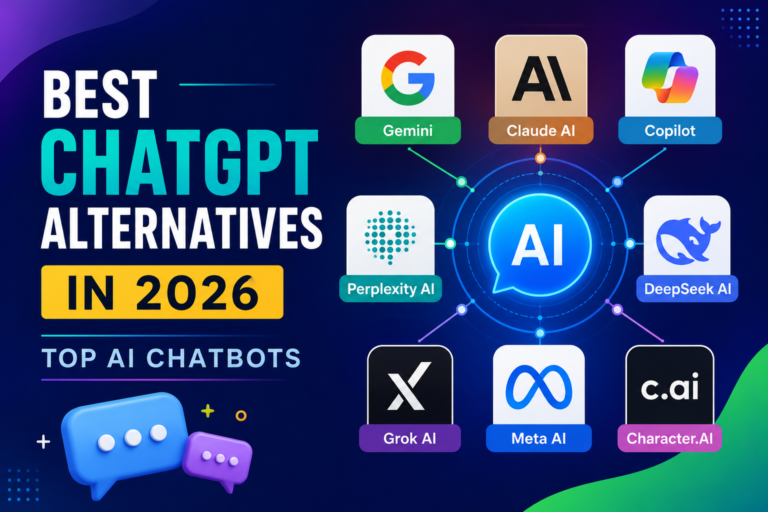
ChatGPT-Based Solutions
Many businesses build chatbots using GPT-powered technologies because of their strong language understanding capabilities.
Common use cases:
- Customer support
- Knowledge assistants
- Sales automation
- Website chat widgets
No-Code Chatbot Builders
No-code platforms allow businesses to launch chatbots without programming knowledge.
Benefits include:
- Fast deployment
- Visual builders
- Easy integrations
- Lower development costs
Open-Source AI Frameworks
Open-source solutions provide greater flexibility and customization.
Popular frameworks often include:
- Llama-based ecosystems
- LangChain
- Haystack
- Rasa
These options are suitable for businesses with technical teams.
Enterprise AI Chatbot Platforms
Large organizations often require:
- Advanced security
- Compliance controls
- CRM integrations
- Analytics dashboards
- Custom workflows
Enterprise platforms address these requirements.
Tool Comparison Table
| Category | Best For | Technical Skill |
| No-Code Builders | Small Businesses | Low |
| GPT-Based Platforms | Most Businesses | Low-Medium |
| Open-Source Frameworks | Developers | High |
| Enterprise Platforms | Large Organizations | Medium-High |
Essential Features Every AI Chatbot Should Have
The most successful chatbots share several key capabilities.
Natural Language Understanding (NLU)
NLU enables chatbots to understand user intent and context rather than relying solely on keyword matching.
Multilingual Support
Global businesses benefit from chatbots capable of serving customers in multiple languages.
Advantages include:
- Wider audience reach
- Better customer experiences
- Increased engagement
Human Handoff Capabilities
AI should not replace humans entirely.
When necessary, chatbots should transfer conversations to live agents with complete context.
CRM and Third-Party Integrations
Integrations improve workflow automation.
Common integrations include:
- CRM systems
- Email platforms
- Calendars
- Help desk software
- Payment gateways
Analytics and Reporting
Track metrics such as:
- Response accuracy
- Resolution rates
- Conversion rates
- Customer satisfaction
- User engagement
Data-driven optimization leads to better performance.
Common Mistakes to Avoid When Building AI Chatbots
Many chatbot projects fail because of avoidable mistakes.
Poor Training Data
Outdated, incomplete, or inaccurate information results in poor responses.
Always maintain clean and updated knowledge sources.
Overcomplicated Conversation Flows
Complex interactions can confuse users.
Keep conversations simple, intuitive, and goal-oriented.
Ignoring User Feedback
Customer conversations provide valuable insights into chatbot weaknesses.
Regular feedback analysis helps improve performance.
Lack of Security and Privacy Measures
Protect customer information through:
- Encryption
- Access controls
- Secure APIs
- Compliance procedures
Security should be built into the chatbot from day one.
💚 You might also like:https://aimastars.com/best-ai-automation-software-for-small-businesses/
Future Trends in AI Chatbots for WhatsApp and Websites
The next generation of chatbots will become increasingly intelligent, proactive, and autonomous.
Generative AI and LLM-Powered Assistants
Large Language Models continue to improve reasoning, context awareness, and conversational quality.
Businesses will increasingly rely on AI assistants capable of handling complex interactions.
Voice-Enabled Chatbots
Voice interfaces are becoming more common across customer support and commerce applications.
Future chatbots will combine text and voice interactions seamlessly.
Hyper-Personalized Customer Experiences
AI systems will use customer data, behavior patterns, and preferences to deliver highly personalized experiences.
This can improve engagement and conversion rates significantly.
AI Agents and Autonomous Workflows
AI agents are moving beyond conversation into action-taking capabilities.
Future systems may:
- Schedule appointments
- Process refunds
- Update records
- Manage workflows
- Execute business tasks autonomously
What Businesses Should Expect Next
Businesses should prepare for:
- Smarter AI assistants
- Greater automation
- Deeper CRM integration
- Advanced personalization
- Lower operational costs
- Higher customer expectations
Organizations that adopt AI chatbot technology early and continuously optimize their implementations will be better positioned to improve customer experiences and remain competitive in the evolving digital landscape.
💚 You might also like:https://aimastars.com/build-a-high-converting-marketing-funnel-easy-guide/
Conclusion
Creating an AI chatbot for a website or WhatsApp is no longer limited to large enterprises with extensive development resources. Modern AI platforms make it possible for businesses of all sizes to build intelligent assistants that automate support, generate leads, improve customer experiences, and drive revenue growth.
By defining clear goals, selecting the right platform, training your chatbot with quality business data, and continuously optimizing performance, you can build a chatbot that delivers measurable business value in 2026 and beyond. 🚀
✨ Smart minds follow smart pages, hit follow on aimastars.com