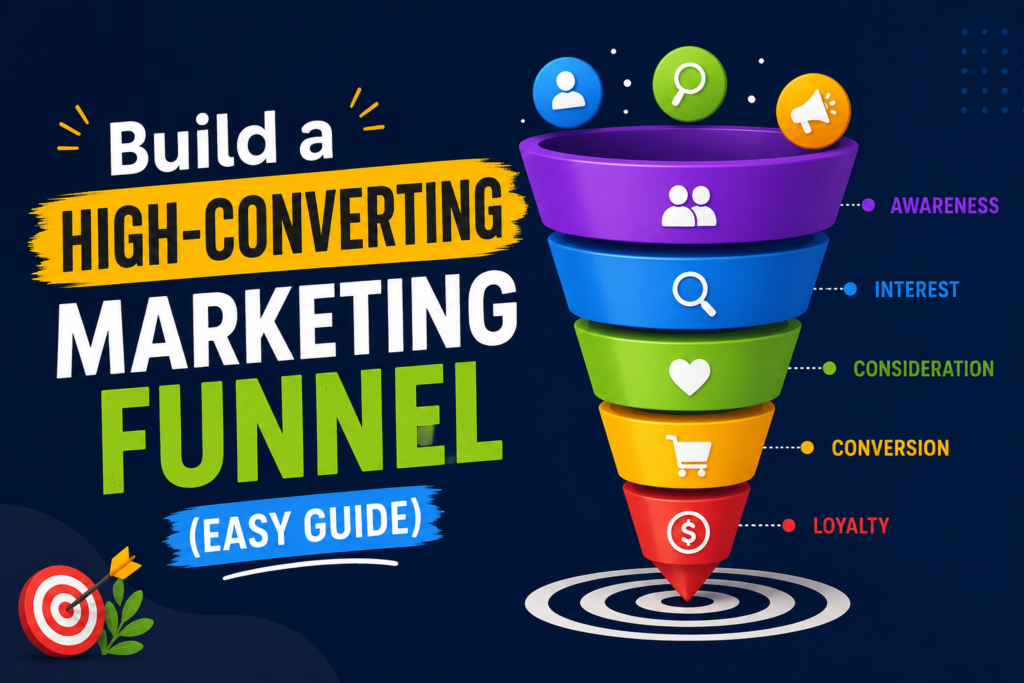

A marketing funnel is a structured process that guides potential customers from discovering your business to making a purchase. Instead of hoping visitors eventually buy, a funnel creates a predictable path that moves people through different stages of the buying journey. Businesses that use well-designed funnels often achieve higher conversion rates because they deliver the right message at the right time. Research from the HubSpot consistently shows that companies with effective lead nurturing strategies generate more sales opportunities than those relying on direct promotion alone. Understanding how marketing funnels work helps businesses turn casual visitors into loyal customers while improving overall marketing efficiency.
Simple Definition of a Marketing Funnel
Think of a marketing funnel as a roadmap that guides people from initial awareness to final purchase. At the top, many people discover your brand, but only a smaller percentage become customers. Each stage filters out unqualified prospects while moving interested buyers closer to making a decision. This structured approach makes customer acquisition more predictable and scalable.
How Funnels Turn Strangers into Customers
Marketing funnels work by building trust gradually. Instead of asking for a sale immediately, businesses first provide valuable information, educational content, or free resources. As prospects engage with the brand, they become more familiar with its products or services. This relationship-building process significantly increases the likelihood of conversion and long-term customer retention.
Difference Between Traffic and Conversions
Traffic refers to the number of visitors coming to your website, while conversions represent visitors who take a desired action, such as subscribing, booking a call, or making a purchase. High traffic alone does not guarantee business growth. A well-optimized funnel focuses on improving conversion rates so that more visitors become qualified leads and customers.
💚 You might also like:https://aimastars.com/openfuture-world/
Real-World Funnel Example
Imagine someone searching for “best email marketing tools.” They discover a helpful blog post, download a free checklist, receive educational emails, and later sign up for a software trial. Eventually, they purchase a paid plan. This journey demonstrates how a marketing funnel nurtures prospects through multiple touchpoints before generating revenue.
Understand Your Ideal Customer Before Building a Funnel
Many marketing funnels fail because businesses focus on tactics before understanding their audience. Before creating landing pages, advertisements, or email sequences, you must identify exactly who you want to reach. Successful funnels address specific problems, desires, and motivations that influence purchasing decisions. According to research published by Salesforce, modern consumers expect personalized experiences throughout their buying journey. The better you understand your ideal customer, the easier it becomes to create messaging that resonates. Building customer profiles and mapping buyer intent allows marketers to design funnels that attract qualified leads and generate stronger conversion rates.
Define Your Target Audience
A target audience is the specific group of people most likely to benefit from your product or service. Consider factors such as age, occupation, interests, income level, and purchasing behavior. Clearly defining your audience helps you create relevant content and marketing campaigns that attract the right prospects instead of wasting resources on unqualified traffic.
Identify Pain Points and Goals
Customers purchase solutions, not products. Understanding what frustrates your audience and what outcomes they want helps you position your offer effectively. Whether they want to save time, increase revenue, reduce costs, or improve productivity, identifying these motivations allows you to create more persuasive marketing messages throughout your funnel.
💚 You might also like:https://aimastars.com/how-to-copy-and-paste-on-chromebook/
Create a Simple Customer Persona
A customer persona is a fictional representation of your ideal buyer based on research and data. Include demographic information, professional background, challenges, goals, and buying habits. Personas help marketers understand customer needs and create funnel content that speaks directly to specific audience segments.
Understand Buyer Intent at Each Stage
Buyer intent changes throughout the funnel. Someone searching for educational information is not ready to buy immediately, while a visitor comparing products is much closer to making a decision. Understanding intent allows you to deliver relevant content that matches each stage of the customer journey.
The 3 Stages of a High-Converting Marketing Funnel
Every successful marketing funnel is built around three core stages: Awareness, Consideration, and Decision. These stages reflect how people naturally make purchasing decisions. Instead of pushing sales too early, businesses guide prospects through a sequence of educational and persuasive interactions. Studies from the Content Marketing Institute show that buyers often consume multiple pieces of content before engaging with a sales offer. By aligning your content and messaging with each stage, you can improve engagement, increase trust, and generate more qualified leads. Understanding these stages is essential for creating a marketing funnel that consistently converts.
Awareness Stage (TOFU)
The Awareness stage, often called Top of Funnel (TOFU), is where prospects first discover your brand. They may find your website through search engines, social media, videos, or advertisements. The primary goal here is to educate and attract attention rather than sell. Valuable content helps establish credibility and build initial trust.
💚 You might also like:https://aimastars.com/best-digital-marketing-tools-for-seo-and-growth/
Consideration Stage (MOFU)
The Consideration stage, or Middle of Funnel (MOFU), focuses on helping prospects evaluate potential solutions. At this point, they understand their problem and are researching options. Case studies, webinars, product comparisons, and lead magnets are effective tools for nurturing interest and strengthening relationships.
Decision Stage (BOFU)
The Decision stage, also known as Bottom of Funnel (BOFU), is where prospects are ready to choose a solution. Testimonials, product demonstrations, free trials, consultations, and detailed pricing information help reduce uncertainty and encourage prospects to take action.
Customer Journey Overview
The customer journey is rarely linear. Prospects may move back and forth between stages before purchasing. A successful marketing funnel accommodates this behavior by providing relevant information at every touchpoint, ensuring potential customers remain engaged throughout the buying process.
Attract the Right Audience to the Top of Your Funnel
The success of your marketing funnel depends heavily on the quality of traffic entering it. Bringing thousands of irrelevant visitors to your website will not generate meaningful results. Instead, focus on attracting people who are actively searching for solutions related to your offer. Organic search, social media, video marketing, and paid advertising can all drive qualified traffic when used strategically. According to industry studies from BrightEdge, organic search continues to drive a significant share of website traffic across industries. By targeting the right audience from the beginning, you increase the likelihood of generating leads and conversions.
💚 You might also like::https://aimastars.com/6-best-ai-resume-builders-for-faster-job-success/
SEO Content
Search engine optimization helps businesses attract visitors who are actively searching for relevant information. Creating keyword-focused blog posts, guides, and tutorials can generate long-term traffic while establishing authority within your industry. SEO often provides one of the highest returns on investment for businesses focused on sustainable growth.
Social Media Marketing
Social media platforms help brands reach new audiences and build engagement. Sharing educational content, industry insights, and interactive posts can increase visibility and encourage users to explore your website. Consistency and audience relevance are key factors for social media success.
YouTube and Video Content
Video content has become a powerful customer acquisition channel. Tutorials, product demonstrations, and educational videos allow businesses to explain complex topics effectively while building trust. Video often increases engagement and keeps prospects connected to your brand longer.
Paid Advertising Basics
Paid advertising provides immediate visibility by placing your content in front of targeted audiences. Platforms such as search engines and social networks allow precise audience targeting. When combined with a strong landing page and lead magnet, paid traffic can generate highly qualified leads.
Choosing the Right Traffic Sources
Not every traffic source will perform equally well for every business. Analyze where your audience spends time and focus your efforts accordingly. The best traffic sources are those that consistently attract visitors with genuine interest in your products or services.
Capture Leads with an Irresistible Offer
Once you attract visitors, the next goal is converting them into leads. Most people will not buy during their first interaction with your brand, which is why lead capture is essential. A compelling offer encourages visitors to exchange their contact information in return for something valuable. Research from multiple lead generation studies shows that businesses using targeted lead magnets often achieve significantly higher conversion rates than those relying solely on generic sign-up forms. The key is providing immediate value that solves a specific problem. A well-crafted offer creates trust, initiates a relationship, and moves prospects deeper into your marketing funnel.
💚 You might also like:https://aimastars.com/best-300-smartphones-for-gaming-camera-2026/
What Is a Lead Magnet?
A lead magnet is a free resource offered in exchange for a visitor’s contact information. Examples include ebooks, templates, checklists, webinars, and free tools. Effective lead magnets solve a specific problem and provide immediate value, making them highly attractive to potential customers.
Best Lead Magnet Examples
Popular lead magnets include industry reports, downloadable templates, video training sessions, calculators, free audits, and email courses. The most effective options are directly related to the product or service being offered later in the funnel.
Creating High-Value Offers
A high-value offer addresses a pressing problem that your audience wants solved quickly. Focus on practical solutions, actionable insights, and measurable benefits. The more relevant and useful your offer is, the more likely visitors will exchange their contact information.
Why Visitors Exchange Their Email Addresses
People share their email addresses when they believe the value received outweighs the perceived risk. Clear benefits, strong trust signals, and relevant content increase the likelihood of conversion. Visitors must immediately understand how the offer will help them achieve their goals.
💚 You might also like:https://aimastars.com/best-ai-automation-software-for-small-businesses/
Let’s keep your learning streak alive. Follow AI Mastars.