
Introduction
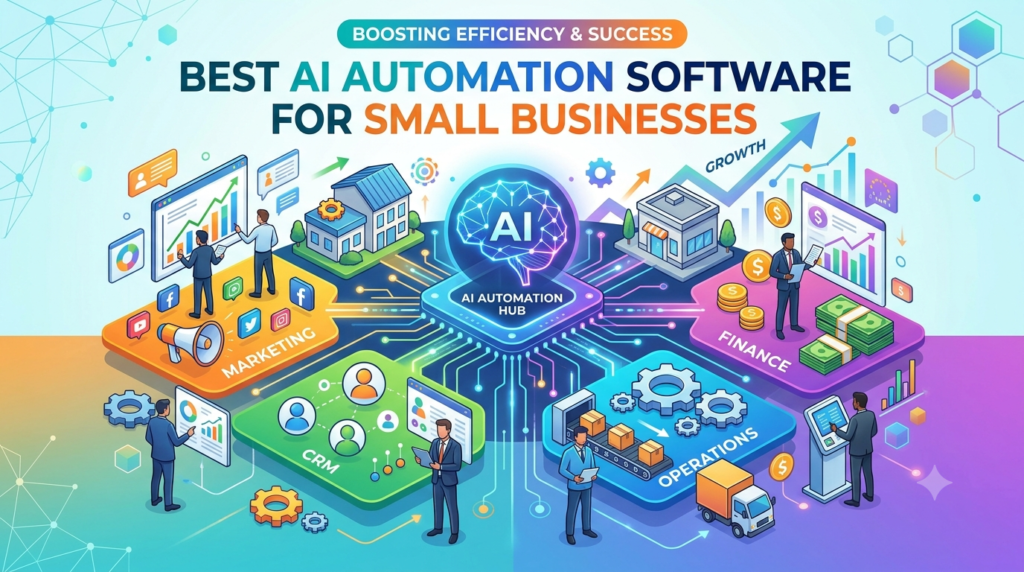
Business automation powered by artificial intelligence in 2026 refers to the use of intelligent systems that perform repetitive, data driven and decision based tasks with minimal human involvement. For small businesses, this shift is no longer optional but a competitive necessity as AI tools reduce workload, increase accuracy, and enable faster customer response across digital channels. It helps owners save operational costs, scale services efficiently, and focus more on strategy and growth instead of manual tasks that consume valuable time every day. Ultimately improving productivity and long term business sustainability significantly for small firms.
Understanding AI-Powered Business Automation
AI-powered business automation uses machine learning models, natural language processing, and intelligent decision systems to execute tasks that normally require human effort. Unlike traditional automation which follows fixed rules, AI systems adapt, learn from data, and improve outcomes over time without constant manual updates. Core technologies include neural networks, predictive analytics, and large language models such as OpenAI’s GPT systems widely used in business tools. These technologies power chatbots, CRM automation, content generation, and workflow optimization platforms used by startups and enterprises globally today. They form the backbone of modern intelligent business operations in businesses.
Customer Support Automation
Customer support automation uses AI chatbots and intelligent ticketing systems to handle customer queries instantly without human intervention. According to IBM research, businesses using AI chatbots can reduce customer service costs by up to 30 percent while improving response times significantly. These systems operate 24/7 and improve satisfaction. Popular tools include ChatGPT, Intercom, and Zendesk AI automation features widely used.
Marketing Automation
Marketing automation powered by AI helps small businesses create content, schedule campaigns, and optimize engagement across digital platforms. Tools like HubSpot and Mailchimp use predictive analytics to send personalized emails and improve conversion rates. AI also assists in SEO optimization, keyword research, and social media scheduling automatically. These capabilities allow brands to grow faster with minimal manual effort required today.
Sales Automation
Sales automation uses AI to generate leads, manage pipelines, and forecast revenue more accurately for small businesses. CRM systems like Salesforce use AI to score leads and recommend next best actions. Predictive analytics helps businesses identify high value prospects and improve closing rates. Automated follow ups and pipeline tracking reduce missed opportunities and increase overall sales efficiency significantly over time.
Operations & Workflow Automation
Operations automation streamlines internal workflows such as task management, invoicing, inventory tracking, and reporting. No code platforms like Zapier and Make allow small businesses to automate repetitive processes without coding knowledge. This reduces operational costs and improves productivity across departments. AI driven workflows ensure data accuracy, faster processing, and better coordination between teams in small business environments overall efficiency gains.
HR & Recruitment Automation
HR automation uses AI to simplify recruitment tasks such as resume screening, candidate shortlisting, and interview scheduling. Platforms like LinkedIn and AI recruiting tools analyze candidate data to match job requirements more effectively. This reduces hiring time and improves quality of hires for small businesses. Automated scheduling tools also eliminate back and forth communication during interview coordination processes significantly improving.
💚 You might also like: Best $300 Smartphones for Gaming & Camera (2026)
Best AI Tools for Business Automation
There are many AI tools available today that help small businesses automate marketing, sales, customer support, and productivity workflows. These tools are designed to be user friendly, scalable, and cost effective, making them suitable even for startups with limited budgets. From content generation to CRM automation, AI platforms are now essential parts of digital business ecosystems. According to McKinsey research, companies adopting AI automation report up to 40 percent productivity improvements. Selecting the right combination of tools depends on business goals, workflow complexity, and integration requirements across different departments is critical for long term success.
Marketing Tools
AI marketing tools help businesses generate content, optimize SEO, and manage social media campaigns efficiently. Platforms like Jasper AI and Copy.ai are widely used for automated copywriting and ad creation. SEO tools powered by AI analyze keywords, competitors, and ranking opportunities in real time. These tools help small businesses increase visibility and attract more organic traffic consistently over time growth.
Customer Service Tools
AI customer service tools provide instant responses, ticket management, and automated support workflows for businesses. Chatbot platforms like Intercom and Drift handle customer queries 24/7 across websites and apps. These systems improve customer satisfaction and reduce response times significantly. They also integrate with CRM systems to provide personalized responses based on customer history and behavior patterns improving service quality overall.
Sales & CRM Tools
Sales and CRM tools use AI to manage customer relationships, track leads, and improve conversion rates. Salesforce AI and HubSpot CRM are leading platforms offering predictive insights and automation features. These tools help businesses prioritize high quality leads and improve sales pipeline efficiency. AI powered forecasting enables better decision making and increases revenue predictability for small business owners significantly improves.
Productivity & Workflow Tools
Productivity and workflow tools powered by AI automate scheduling, task management, and project coordination. No code automation platforms like Zapier and Make connect apps and streamline workflows easily. These tools reduce manual workload and improve team efficiency across departments. They are widely used by small businesses to save time, reduce costs, and improve operational performance overall with measurable results quickly.
Step-by-Step Guide to Implement AI Automation in a Small Business
Implementing AI automation in a small business requires a structured approach to ensure efficiency and measurable results. First identify repetitive tasks such as data entry, customer support, or marketing workflows that consume significant time. Next choose AI tools that align with business needs and integrate easily into existing systems. After that integrate the selected tools into your workflow and train your team to use them effectively. Monitoring performance is essential to identify improvements and ensure long term success. Continuous optimization based on analytics helps small businesses scale and adapt to changing market conditions efficiently today.
💚 You might also like: 6 Best AI Resume Builders for Faster Job Success
Real-World Use Cases of AI in Small Businesses
AI is already transforming how small businesses operate across industries like e-commerce, marketing agencies, and local services. According to a 2024 Deloitte report, over 62% of small businesses using AI tools reported improved operational efficiency within the first year. These use cases show how automation reduces manual workload while increasing revenue potential. From automating customer interactions to optimizing sales funnels and scheduling workflows, AI creates scalable systems that work 24/7. Below are practical examples of how different small businesses apply AI automation in real business environments today.
E-commerce Store Automation Example
AI in e-commerce automates product recommendations, inventory tracking, and customer support. Platforms like Shopify use AI to suggest products based on user behavior, increasing conversion rates by up to 20–30% according to McKinsey insights. Chatbots handle order queries instantly, while predictive tools manage stock levels efficiently.
Digital Marketing Agency Automation Example
Digital agencies use AI tools for content creation, SEO optimization, and campaign management. Tools like Jasper and SurferSEO analyze data to generate high-performing content strategies. This reduces production time by nearly 40%, allowing agencies to handle more clients without increasing team size significantly.
Local Service Business Automation Example
Local businesses such as salons or repair services use AI for appointment scheduling, reminders, and customer follow-ups. Tools like Calendly and AI CRM systems reduce no-shows and improve customer retention. Automated messaging systems ensure consistent communication without manual effort from staff.
Benefits of AI Automation for Small Businesses
AI automation provides measurable advantages that directly impact profitability and efficiency. According to McKinsey Global Institute, businesses that adopt AI-driven automation can improve productivity by up to 40%. Small businesses benefit the most because they often operate with limited staff and resources. AI reduces repetitive workload, enhances decision-making, and improves customer satisfaction through faster response systems. It also allows business owners to focus on strategy instead of manual tasks. These benefits collectively create stronger scalability, better cost control, and improved competitiveness in fast-moving digital markets.
Reduced Operational Cost
AI reduces costs by replacing manual labor in repetitive tasks such as customer support, data entry, and reporting. Businesses save on staffing expenses while maintaining efficiency. Chatbots and automated systems work 24/7 without additional salary costs, significantly lowering operational overhead.
Faster Business Processes
Automation speeds up workflows by instantly handling tasks like email responses, lead generation, and scheduling. Instead of waiting hours or days, processes are completed in seconds. This improves business responsiveness and helps companies serve more customers efficiently.
Improved Customer Experience
AI enhances customer satisfaction through instant responses, personalized recommendations, and consistent service quality. Studies from Salesforce show that 80% of customers value quick responses. AI ensures customers receive immediate support regardless of time or workload.
Better Decision Making
AI analyzes large datasets to provide insights that help business owners make smarter decisions. Predictive analytics identifies trends, customer behavior, and sales opportunities. This reduces guesswork and improves strategic planning accuracy for long-term business growth.
💚 You might also like: Top AI Tools for Students in 2026 to Learn Smarter
Challenges and Limitations of AI Automation
Despite its advantages, AI automation comes with certain challenges that small businesses must carefully manage. A 2023 IBM study highlights that nearly 35% of AI adoption issues stem from lack of technical understanding and integration complexity. Small businesses often struggle with selecting the right tools, training staff, and ensuring data security. While AI improves efficiency, improper implementation can lead to inefficiencies or over-reliance on systems. Understanding these limitations is essential to create a balanced and sustainable automation strategy that supports long-term growth without operational risks.
Learning Curve for Beginners
Many small business owners lack technical expertise in AI tools, making adoption challenging. Learning how to configure workflows, integrate platforms, and optimize settings requires time. Without proper training, businesses may underutilize AI capabilities or face implementation errors.
Tool Integration Issues
Different AI tools often operate on separate systems, making integration complex. Connecting CRM, marketing, and automation platforms may require APIs or third-party tools like Zapier. Poor integration can lead to data inconsistency or workflow disruptions across departments.
Data Privacy Concerns
AI systems rely heavily on data, raising concerns about privacy and compliance.Regulations like GDPR highlight the importance of responsible AI usage to avoid legal and reputational risks.
Over-Dependence on AI Systems
Relying too heavily on AI can reduce human oversight and creativity. While automation improves efficiency, critical decisions still require human judgment. Over-dependence may lead to errors if systems fail or produce inaccurate outputs without supervision.
Future of AI in Business Automation
The future of AI in business automation is moving toward fully autonomous systems powered by advanced AI agents and machine learning models. According to PwC, AI could contribute up to $15.7 trillion to the global economy by 2030, showing its massive impact. Small businesses will increasingly adopt hybrid systems where humans and AI collaborate seamlessly. This evolution will lead to smarter workflows, predictive operations, and fully automated business models capable of running with minimal human intervention while maintaining high efficiency and adaptability across industries.
Rise of AI Agents
AI agents will independently perform complex tasks such as managing sales funnels, responding to customers, and optimizing campaigns. Unlike simple automation, these agents can make decisions based on context and learning, reducing the need for human input significantly.
Fully Automated Small Businesses Concept
Future small businesses may operate with minimal staff, relying on AI for operations, marketing, and support. These systems will integrate across platforms, creating end-to-end automation that handles nearly every repetitive function automatically.
Human + AI Hybrid Workflows
Instead of replacing humans, AI will work alongside them. Employees will focus on strategy and creativity while AI handles execution and data processing. This hybrid model improves productivity and ensures balanced decision-making in business environments.
💚 You might also like: Best Digital Marketing Tools for SEO & Growth 2026
Conclusion
AI-powered business automation is no longer a future concept but a present-day necessity for small businesses aiming to stay competitive. AI delivers measurable value across all operations. Businesses that adopt automation early gain a significant advantage in scalability and market responsiveness. However, successful implementation requires balance between technology and human oversight. The key takeaway is simple: start small, automate repetitive tasks, and gradually expand AI usage to transform your business into a smarter, more efficient, and future-ready operation.
✨ Don’t miss tomorrow’s insight, follow AI Mastars today.