
OpenFuture World: A Comprehensive Guide
In recent years, the global financial industry has been undergoing a silent but powerful transformation. Traditional banking models, once closed and institution-centric, are being replaced by more transparent, connected, and user-focused systems. At the center of this shift stands OpenFuture World, a platform that represents the evolving reality of open banking, open finance, and data-driven financial innovation.
What Is OpenFuture World?
OpenFuture World is a global information and knowledge platform designed to support and map the rapidly expanding open banking and open finance ecosystem. Rather than functioning as a traditional financial service provider, it acts as a centralized hub where users can explore companies, technologies, regulations, and trends shaping the future of finance.
At its core, OpenFuture World focuses on access, transparency, and connectivity. It brings together data from fintech companies, banks, API providers, regulators, and technology innovators, making it easier for professionals to understand how the financial ecosystem is evolving.
Unlike generic business directories, OpenFuture World is purpose-built for the open finance era. Its structure, language, and content are aligned with modern financial innovation, making it especially valuable for fintech founders, developers, analysts, and decision-makers.
Why OpenFuture World Matters Today
The financial world is no longer siloed. Customers expect seamless digital experiences, regulators push for competition and transparency, and technology enables real-time data exchange. In this environment, fragmented information becomes a serious barrier.
OpenFuture World matters because it solves three critical problems:
Information fragmentation:
Open finance data is often scattered across regions, platforms, and industries.
Lack of clarity:
Many professionals struggle to understand how open banking works in practice.
Discovery challenges:
Finding relevant fintech partners, APIs, or insights can be time-consuming.
By organizing this information into a structured, searchable ecosystem, OpenFuture World enables smarter decisions and faster innovation.
The Origins and Vision Behind OpenFuture World
The Problem It Was Built to Solve
Before platforms like OpenFuture World, open banking, and open finance information lived in disconnected silos. Banks focused on compliance, fintechs promoted isolated solutions, and regulators published dense documentation. There was no single place to see the ecosystem as a whole.
OpenFuture World emerged to address this gap. Its vision was simple but ambitious: create a living map of the global open finance landscape.
A Platform Shaped by Industry Evolution
As regulations such as PSD2 in Europe and similar frameworks worldwide encouraged data sharing, the need for an ecosystem-level perspective became clear. OpenFuture World evolved alongside these changes, expanding its coverage beyond banking into broader financial services, including payments, lending, identity, and data infrastructure.
Core Concepts Powering OpenFuture World
To fully understand OpenFuture World, it’s essential to grasp the foundational ideas upon which it is built.
Open Banking Explained
Open banking allows third-party providers to access bank customer data (with consent) via secure APIs. This enables new services such as account aggregation, smarter payments, and personalized financial tools.
OpenFuture World treats open banking not as a buzzword, but as a structural shift in how financial services operate.
Open Finance: Beyond Banking
While open banking focuses on bank data, open finance expands this concept to include investments, insurance, pensions, and other financial products.
OpenFuture World reflects this broader scope by covering:
Fintech platforms
Financial infrastructure providers
Data and API ecosystems
Cross-industry collaborations
Financial Data Sharing and APIs
APIs are the technical backbone of open finance. Without standardized, secure APIs, data sharing at scale would be impossible. OpenFuture World highlights how APIs connect institutions, developers, and users into a unified system.
How OpenFuture World Fits Into the Global Financial Landscape
A Bridge Between Stakeholders
One of OpenFuture World’s strongest advantages is its ability to serve multiple audiences at once:
Banks use it to understand innovation trends
Fintech startups use it for visibility and partnerships
Developers explore API-driven solutions
Investors and analysts gain ecosystem-level insights
Regulators and researchers track adoption and impact
Instead of speaking to just one segment, OpenFuture World operates at the ecosystem level.
Not Just a Directory, but an Intelligence Layer
Traditional directories list companies. OpenFuture World goes further by adding context. It connects organizations to trends, regulations, technologies, and real-world use cases, helping users understand not just who exists, but why they matter.
Who Should Pay Attention to OpenFuture World?
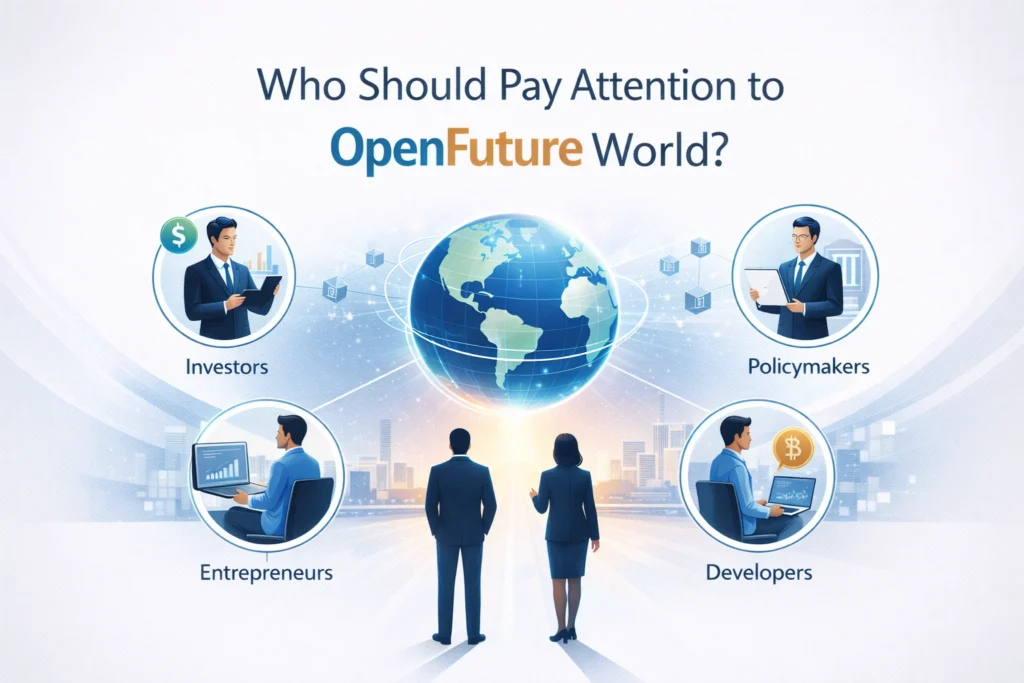
OpenFuture World is especially relevant for:
Fintech founders looking to position their products
Agencies and consultants researching open finance markets
Content creators and educators covering financial innovation
Businesses planning API integrations
Professionals transitioning into fintech or open banking roles
In short, anyone who wants to stay relevant in the future of finance can benefit from understanding this platform.
The Global Open Finance and Open Banking Directory
One of the most powerful elements of OpenFuture World is its structured global directory. This directory is not just a list of companies; it is an ecosystem map that reflects how open finance works in the real world.
What the Directory Includes
The OpenFuture World directory typically covers:
Fintech startups
Banks and financial institutions
API and infrastructure providers
Data aggregation platforms
Payment and lending technology firms
Each listing is organized to help users quickly understand what a company does, where it operates, and how it fits into the open finance value chain.
Advanced Categorization and Filters
To avoid information overload, the platform uses smart categorization:
By region or country
By service type (payments, data, identity, lending, etc.)
By role in the ecosystem (provider, enabler, regulator)
This structure allows users to move from a high-level ecosystem view to specific, targeted insights within minutes.
Industry Insights, News, and Knowledge Resources
Open finance is a fast-moving space. Regulations change, technologies evolve, and new players emerge constantly. OpenFuture World addresses this by acting as a knowledge and insight layer, not just a static platform.
Curated Industry News
Instead of overwhelming users with raw news feeds, OpenFuture World emphasizes relevance. Content is typically aligned with:
Open banking regulation updates
Fintech innovation trends
API standardization efforts
Cross-border financial collaboration
This helps readers stay informed without having to monitor dozens of separate sources.
Educational and Thought Leadership Content
Another strength of OpenFuture World is its focus on education. Articles, explainers, and ecosystem breakdowns help users understand:
How open banking works in different regions
What open finance means beyond traditional banking
Where the industry is heading next
This content is especially valuable for professionals entering the fintech space or businesses adapting to digital transformation.
Events, Webinars, and Ecosystem Collaboration
Open finance thrives on collaboration, and OpenFuture World reflects this reality by highlighting events and community-driven initiatives.
Global and Regional Events
The platform often features:
Open banking conferences
Fintech summits
Developer-focused webinars
Regulatory roundtables
These events help connect ideas with people, turning theory into real-world collaboration.
Why Events Matter in Open Finance
Unlike traditional finance, open finance depends heavily on:
Shared standards
Interoperability
Trust between stakeholders
By promoting ecosystem events, OpenFuture World helps accelerate adoption and alignment across the industry.
Tools, Accessibility, and User Experience
Designed for Professionals, Not Just Readers
OpenFuture World is built with usability in mind. Whether someone is researching competitors, exploring partnerships, or learning the basics of open finance, the platform supports goal-oriented navigation.
Key usability strengths include:
Clean interface
Logical content structure
Easy discovery of related topics
Web and Mobile Accessibility
Modern professionals work across devices, and OpenFuture World reflects this reality. Its web-first design ensures accessibility for:
Researchers on desktop
Founders and consultants on mobile
Developers referencing information on the go
Accessibility supports wider adoption and keeps the ecosystem connected.
How Different Users Benefit from OpenFuture World
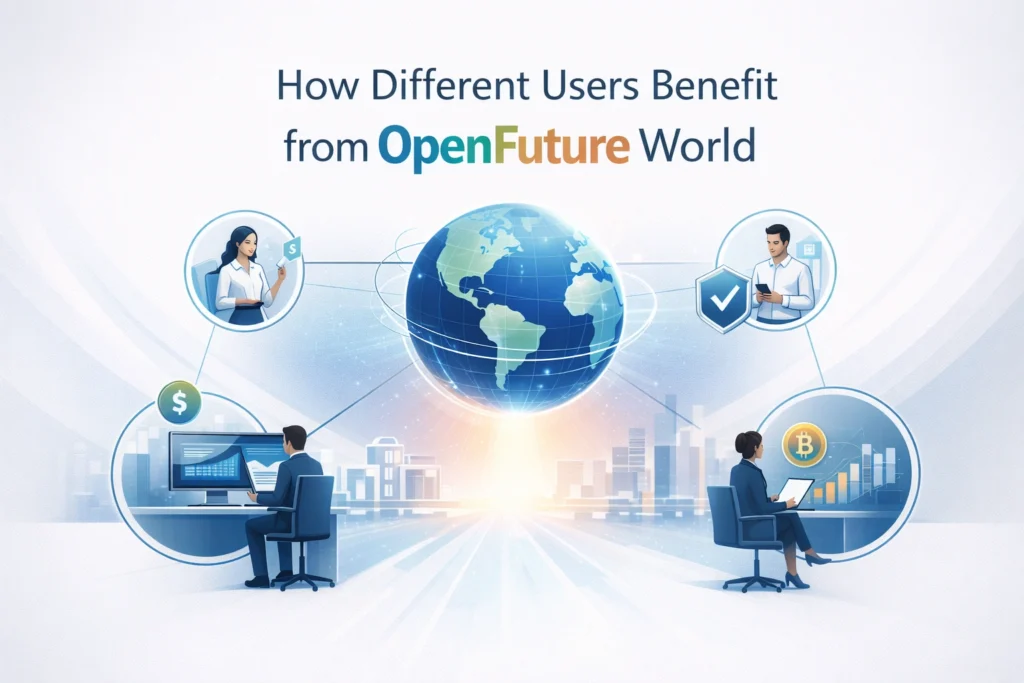
Fintech Startups and Founders
For startups, visibility is everything. OpenFuture World offers:
- Ecosystem exposure
- Market positioning
- Competitive awareness
Being part of a global open finance directory helps startups appear credible and discoverable.
Banks and Financial Institutions
Traditional institutions use OpenFuture World to:
- Monitor innovation trends
- Identify fintech partners
- Understand regulatory and technology shifts
This insight helps banks remain competitive in a rapidly changing environment.
Developers and Technical Teams
Developers benefit from ecosystem-level clarity. Instead of focusing on isolated APIs, they can:
Understand how tools connect
Identify integration opportunities
Track standardization trends
Investors, Analysts, and Researchers
For analysts, context is critical. OpenFuture World provides a structured overview that supports:
Market analysis
Trend forecasting
Ecosystem mapping
Why These Features Create Real Ecosystem Value
The true value of OpenFuture World lies in connection, not just content. By bringing together companies, insights, events, and education, the platform reduces friction in the open finance space.
It helps users move from:
Confusion → clarity
Isolation → collaboration
Static knowledge → evolving understanding
This makes it more than a platform; it becomes a reference point for the industry.
The Real-World Impact of OpenFuture World
OpenFuture World does not operate in isolation. Its value is measured by how effectively it supports decision-making, collaboration, and innovation across the financial ecosystem.
Empowering Smarter Business Decisions
For fintech companies and service providers, understanding the market landscape is essential. OpenFuture World helps businesses:
Identify gaps in the ecosystem
Discover potential partners or competitors
Validate ideas against real market activity
Instead of relying on fragmented research, companies gain a single, ecosystem-level perspective.
Accelerating Open Finance Adoption
Adoption of open finance depends heavily on awareness and trust. By clearly explaining concepts, showcasing real players, and highlighting use cases, OpenFuture World lowers the entry barrier for:
Traditional financial institutions
Non-financial businesses entering fintech
Policymakers and regulators seeking clarity
This educational role accelerates adoption across regions.
Benefits for Key Stakeholders
For Fintechs and Startups
Startups gain visibility and credibility by being part of a recognized ecosystem map. Benefits include:
Increased discoverability
Better positioning within the open finance value chain
Stronger narrative when engaging investors or partners
For Banks and Enterprises
Banks use OpenFuture World as a strategic lens to:
Track emerging technologies
Understand fintech collaboration models
Benchmark innovation against peers
This helps them move from defensive compliance to proactive innovation.
For Developers and Technical Teams
Developers benefit from ecosystem context. Rather than focusing only on code, they gain insight into:
How APIs fit into larger workflows
Which standards are gaining traction
Where interoperability challenges exist
For Investors and Researchers
Investors and analysts use OpenFuture World to observe:
Market maturity across regions
Adoption trends in open finance
Concentration of innovation by sector
This supports more informed forecasting and investment strategies.
Challenges and Limitations
No platform is without challenges, and OpenFuture World is no exception.
Data Accuracy and Freshness
In a fast-moving industry, keeping information up to date is an ongoing challenge. New startups emerge, regulations change, and companies pivot. Maintaining accuracy requires:
Continuous updates
Strong data validation processes
Community or partner input
Regional Imbalances
Open finance adoption varies widely by geography. Some regions are highly regulated and mature, while others are still emerging. Representing this diversity fairly is complex but necessary for global relevance.
Awareness Beyond Niche Audiences
While OpenFuture World is well-aligned with fintech professionals, broader awareness among traditional businesses and non-technical audiences is still evolving. Expanding reach without oversimplifying concepts is a delicate balance.
Global Open Banking and Open Finance Trends
Understanding the future of OpenFuture World requires looking at broader industry trends.
Regulatory Expansion
More countries are introducing open banking and open finance frameworks. As regulation expands:
Demand for ecosystem intelligence increases
Cross-border comparisons become more valuable
Platforms like OpenFuture World gain strategic importance
Shift Toward Embedded Finance
Open finance is no longer limited to banks and fintechs. Retailers, software platforms, and digital services are embedding financial features. This expands the ecosystem and increases the need for structured knowledge hubs.
Standardization and Interoperability
As APIs and data standards mature, the focus shifts from experimentation to scale. Tracking these standards is critical and aligns directly with OpenFuture World’s mission.
The Future of OpenFuture World
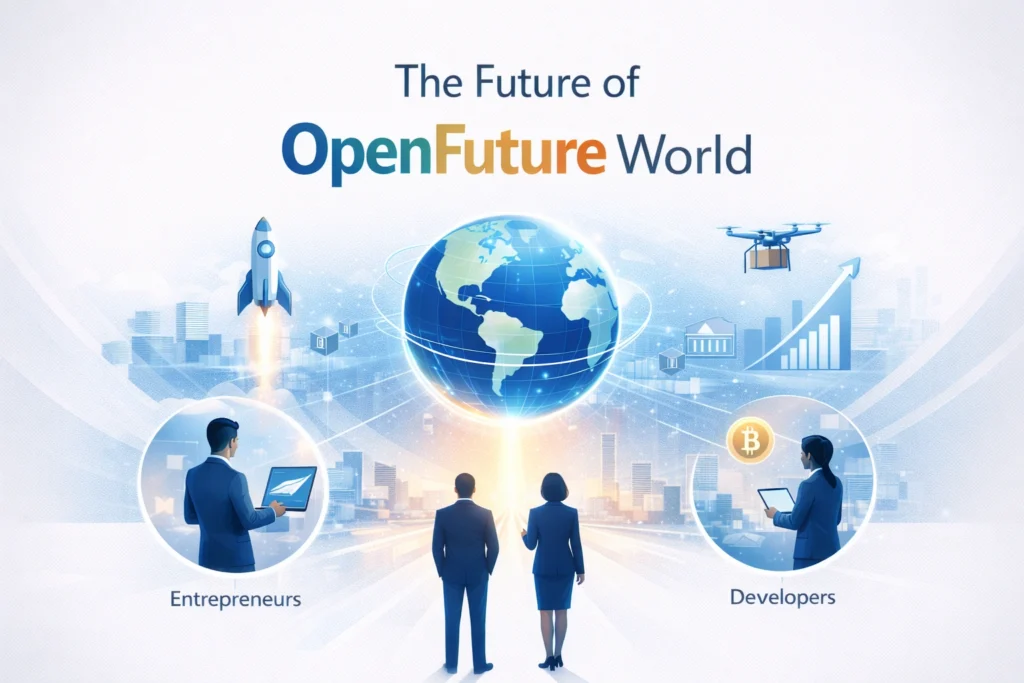
Looking ahead, OpenFuture World is likely to evolve in several key ways:
Deeper ecosystem mapping with richer context and relationships
More educational resources for non-technical audiences
Stronger regional insights to reflect local regulations and adoption
Greater integration with industry events and communities
Rather than becoming obsolete, its relevance grows as the ecosystem becomes more complex.
Conclusion
OpenFuture World represents more than a platform, it reflects a mindset shift in global finance. As financial systems become more open, interconnected, and data-driven, the need for clarity and context becomes critical.
By organizing information, explaining concepts, and connecting stakeholders, OpenFuture World helps turn complexity into opportunity. For anyone serious about understanding or participating in the future of finance, it serves as a trusted reference point.
In an industry defined by change, platforms that make sense of that change don’t just survive, they shape what comes next.
Frequently Asked Questions (FAQs)
What is OpenFuture World used for?
OpenFuture World is used to explore and understand the global open banking and open finance ecosystem, including companies, trends, technologies, and industry insights.
Is OpenFuture World only for fintech professionals?
No. While fintech professionals benefit greatly, the platform is also useful for banks, businesses, researchers, investors, developers, and anyone learning about open finance.
How does OpenFuture World differ from traditional business directories?
Traditional directories list companies. OpenFuture World adds ecosystem context, industry insights, and educational value tailored specifically to open finance.
Does OpenFuture World cover global markets?
Yes. It aims to represent open banking and open finance activity across multiple regions, reflecting differences in regulation and adoption.
Why is OpenFuture World important for the future of finance?
As finance becomes more open and interconnected, understanding the ecosystem is essential. OpenFuture World helps stakeholders navigate this complexity and make informed decisions.
Good read? Better ones are coming, follow AI Mastars.