
Every day, we throw things away without thinking twice. A plastic bottle, a food wrapper, an old box, once it leaves our hands, it disappears from our minds. But in reality, that “away” doesn’t really exist. Waste piles up in landfills, oceans, and ecosystems, creating a growing environmental crisis that traditional recycling systems are struggling to handle.
This is where matarecycler begins to stand out. Instead of relying on outdated, manual processes, matarecycler represents a smarter, more intelligent approach to waste management. It blends technology with sustainability, aiming to transform how we sort, process, and reuse materials. Rather than treating waste as a problem, it treats it as an opportunity, a resource waiting to be recovered.
The idea isn’t just about recycling more. It’s about recycling better, faster, and more efficiently.
What Is MataRecycler?
At its core, matarecycler is a concept built around smart recycling systems powered by modern technology. It is not limited to a single machine or tool. Instead, it represents a broader ecosystem where artificial intelligence, sensors, and automation work together to improve the recycling process.
Think of it this way: instead of humans manually sorting waste into different categories, a matarecycler system can identify materials automatically, separate them with precision, & ensure they are processed correctly. This reduces errors, saves time, and significantly increases recycling efficiency.
What makes matarecycler interesting is how flexible it is. It can exist as a physical setup like smart bins and automated sorting facilities, or as a digital system that tracks and optimizes waste management processes. In many ways, it’s both a technology and a strategy.
The Core Idea Behind MataRecycler
The foundation of matarecycler lies in one simple idea: waste should never be wasted.
Traditional systems often fail because they treat recycling as a secondary task. Matarecycler flips that mindset. It places intelligence at the center of the process, ensuring that materials are identified, sorted, and reused in the most effective way possible.
This shift turns recycling into a proactive system rather than a reactive one. Instead of fixing mistakes after they happen, it prevents them from happening in the first place.
Why Traditional Recycling Systems Are Failing
To understand why matarecycler matters, it’s important to look at the limitations of current recycling systems. For decades, recycling has relied heavily on human effort. Workers sort materials by hand, systems depend on proper disposal by users, and contamination often ruins entire batches of recyclable waste.
One of the biggest issues is inconsistency. People don’t always know what can or cannot be recycled. Even when they try to do the right thing, mistakes are common. A single contaminated item, like a food-stained container, can disrupt the entire process.
Another problem is inefficiency. Manual sorting takes time, requires labor, and is prone to error. As waste production increases globally, these systems simply can’t keep up.
Real Problems in Waste Management Today
If you take a closer look, the cracks in the system become obvious. Landfills are expanding at an alarming rate, and many recyclable materials never actually get recycled. Instead, they end up buried or burned, contributing to pollution and climate change.
There’s also a lack of transparency. Once waste is collected, most people have no idea what happens next. This disconnect reduces accountability and makes it harder to improve the system.
In short, the traditional approach is outdated. It was designed for a time when waste levels were lower, and sustainability was not a global priority. Today, the situation is very different.
📌You might also like: HHKTHK
Evolution of Recycling (From Manual to Smart Systems)
Recycling has come a long way over the years. What started as a simple process of collecting and reusing materials has evolved into a complex industry. However, the real transformation began when technology entered the picture.
Modern systems are no longer limited to human effort. Machines can now assist with sorting, processing, and tracking waste. This shift has opened the door for innovations like matarecycler, which take these advancements even further.
The move from manual to smart systems is not just an upgrade, it’s a necessity. As urban populations grow and consumption increases, smarter solutions are required to manage waste effectively.
Shift Toward AI & Automation
Artificial intelligence plays a key role in this transformation. Instead of relying on guesswork, AI systems can analyze data, recognize patterns, and make decisions in real time. In the context of recycling, this means identifying materials accurately and sorting them with precision.
Automation complements this by handling repetitive tasks. Machines can work continuously without fatigue, maintaining consistency and speed that humans simply cannot match.
Together, AI and automation form the backbone of matarecycler systems. They enable a level of efficiency and accuracy that was previously impossible.
Key Technologies Powering MataRecycler
Behind the concept of matarecycler lies a combination of advanced technologies working seamlessly together. Each plays a specific role, contributing to a more efficient and intelligent recycling process.
Artificial intelligence is responsible for recognizing different types of materials. It can distinguish between plastics, metals, paper, and more, even when they look similar.
Sensors add another layer of intelligence. They can detect the presence, weight, and type of waste, providing valuable data that helps optimize the system.
Data analytics ties everything together. Analyzing patterns and performance, it allows the system to improve over time. This means that a matarecycler setup doesn’t just work; it learns and evolves.
Role of Artificial Intelligence in Recycling
AI is what truly sets matarecycler apart from traditional systems. It enables machines to “see” and understand waste in a way that mimics human perception, but with far greater accuracy.
For example, an AI-powered system can analyze an object in milliseconds, determine its material, and direct it to the correct processing stream. Over time, it becomes even better at this task by learning from new data.
This ability to adapt is crucial. Waste streams are constantly changing, with new materials and packaging designs appearing regularly. A static system would struggle to keep up, but an intelligent one can adjust and improve.
By combining these technologies, matarecycler represents a shift toward smarter, more sustainable waste management. It doesn’t just address the problems of today; it prepares us for the challenges of tomorrow.
How MataRecycler Works (Step-by-Step System Breakdown)
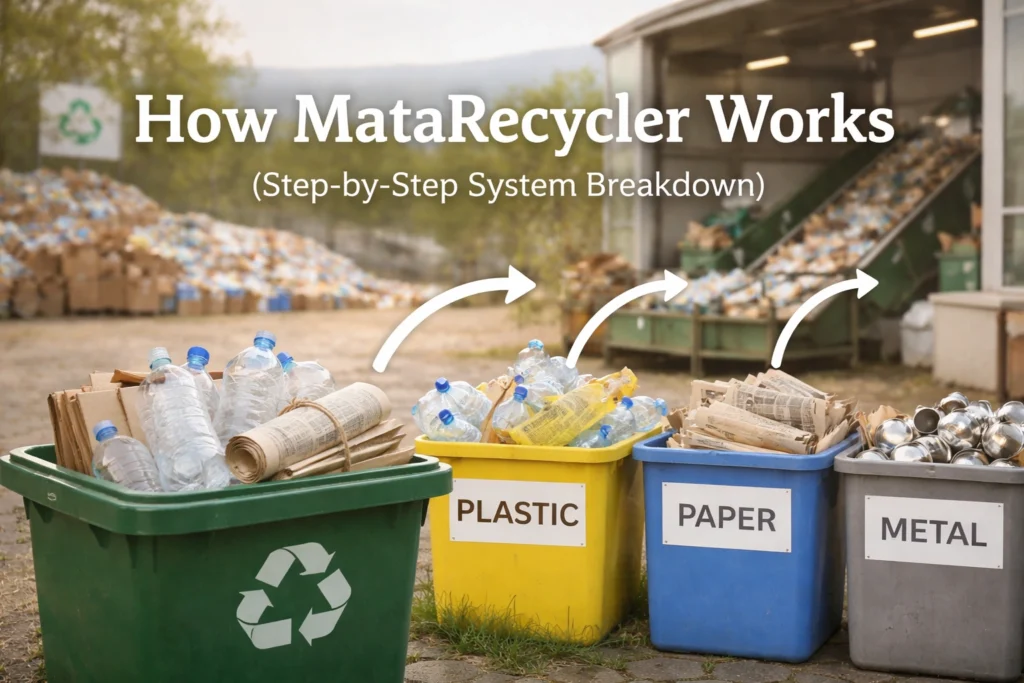
Understanding matarecycler becomes much easier when you break it down into a simple flow. Instead of thinking of it as one complex system, imagine it as a sequence of smart actions happening behind the scenes, each one designed to make recycling faster, cleaner, and more accurate.
At every stage, technology replaces guesswork with precision.
Step 1: Smart Waste Collection
The process begins right where waste is generated. Instead of traditional bins, matarecycler systems often use smart containers equipped with sensors. These bins are not just passive storage units, they actively collect data. They can detect how full they are, what type of waste is being deposited, and even how frequently they are used. This information is then sent to a central system, allowing waste collection to become more organized and efficient.
For example, instead of emptying bins on a fixed schedule, collection teams can focus only on bins that actually need attention. This reduces unnecessary trips, saves fuel, and lowers operational costs. At the same time, users may receive guidance while disposing of waste. Some systems provide visual or digital cues to help people place items in the correct category, reducing contamination right from the start.
Step 2: AI-Based Material Identification
Once waste enters the system, the next challenge is identifying what each item is made of. This is where artificial intelligence plays a major role.
Instead of relying on manual sorting, matarecycler systems use cameras and machine learning models to recognize materials instantly. The system scans each item and determines whether it is plastic, metal, paper, glass, or something else.
What makes this powerful is the level of detail involved. AI doesn’t just identify broad categories; it can distinguish between different types of plastics or detect mixed materials that are harder to process.
This step significantly reduces human error. It also speeds up the process, as identification happens in real time rather than through slow, manual inspection.
Step 3: Automated Sorting Process
After identification, the system moves into action. Items are automatically directed to the correct channels using mechanical systems such as conveyor belts, air jets, or robotic arms.
This is where matarecycler truly shows its efficiency. Instead of workers manually separating waste, machines handle the task with consistency and accuracy. The chances of contamination drop dramatically because each item is placed exactly where it belongs.
Automation also allows the system to handle large volumes of waste without slowing down. Whether it’s a small facility or a city-scale operation, the process remains smooth and scalable.
Over time, this leads to higher-quality recycled materials, which are easier to reuse in manufacturing and production.
Step 4: Data Monitoring & Optimization
The final step is not really an end, it’s a continuous loop of improvement. Matarecycler systems collect data at every stage, from collection to sorting and processing. This data is analyzed to identify patterns and inefficiencies. For instance, the system might notice that certain types of waste are frequently misclassified or that specific locations generate more recyclable materials than others.
With these insights, adjustments can be made. Routes can be optimized, sorting algorithms can be improved, and overall performance can be enhanced. This is what makes matarecycler different from traditional recycling. It doesn’t just operate, it learns, adapts, and evolves.
📌You might also like: Aponeyrvsh
Key Features of MataRecycler Systems
One of the reasons matarecycler is gaining attention is because of the unique features it brings together. These features are not isolated; they work collectively to create a smarter and more reliable recycling ecosystem.
Intelligent Sorting Systems
At the heart of matarecycler lies intelligent sorting. Unlike conventional systems that depend heavily on human input, these systems use AI to make decisions instantly.
This ensures that materials are sorted correctly, even when they look similar or are partially damaged. The result is cleaner output and less waste being rejected due to contamination.
Real-Time Monitoring
Another defining feature is real-time visibility. Operators can track what’s happening across the entire system at any given moment. This includes monitoring waste levels, tracking sorting accuracy, and identifying potential issues before they become serious problems. It brings a level of control that traditional systems simply cannot offer.
Adaptive Learning Models
Matarecycler systems are not static. They improve over time through continuous learning. As new types of packaging and materials enter the waste stream, the system adapts. This ensures long-term relevance and reduces the need for constant manual updates.
Cloud-Based Waste Management
Many matarecycler solutions are connected to cloud platforms. This allows data to be stored, analyzed, and accessed from anywhere. It also enables integration with other systems, such as city infrastructure or business operations. In a smart city environment, this connectivity becomes especially valuable.
Benefits of MataRecycler
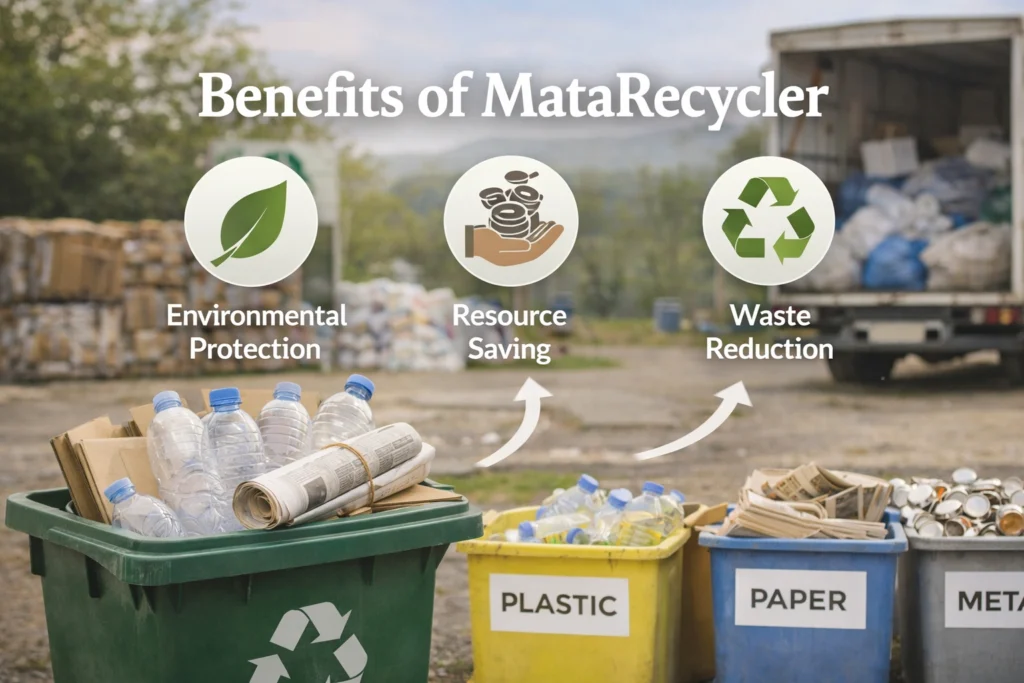
The impact of matarecycler goes beyond just improving recycling rates. It creates value across multiple dimensions: environmental, economic, and operational.
Environmental Benefits
One of the most obvious advantages is the reduction of waste ending up in landfills. By improving sorting accuracy, more materials can be successfully recycled instead of being discarded.
This also leads to lower carbon emissions. When materials are reused instead of being produced from scratch, the energy required is significantly reduced.
Over time, this contributes to a cleaner environment and a more sustainable future.
Economic Benefits
From a financial perspective, matarecycler offers strong advantages. Efficient systems reduce labor costs and minimize waste handling expenses.
At the same time, higher-quality recycled materials can be sold or reused, creating new revenue opportunities. Businesses and municipalities can turn waste management from a cost center into a value-generating activity.
Operational Benefits
On an operational level, the system brings clarity and efficiency. Real-time data allows for better decision-making, while automation ensures consistent performance.
Processes become faster, errors are reduced, and resources are used more effectively. This creates a smoother workflow from start to finish.
MataRecycler and the Circular Economy
To fully understand the significance of matarecycler, it’s important to look at the bigger picture, specifically, the concept of the circular economy.
What is the Circular Economy?
A circular economy is built on the idea that resources should be reused and recycled continuously, rather than discarded after a single use. Instead of the traditional “take, make, dispose” model, it focuses on keeping materials in circulation for as long as possible.
How MataRecycler Supports It
Matarecycler fits naturally into this model. By improving the efficiency and accuracy of recycling, it ensures that more materials are recovered and reintroduced into the production cycle. It closes the loop between waste and resource, turning what was once considered useless into something valuable again.
This shift is essential for long-term sustainability, especially in a world where resources are becoming increasingly limited.
Where MataRecycler Is Used
The flexibility of matarecycler allows it to be applied in a wide range of environments. It is not limited to large-scale facilities, it can be adapted to different settings depending on the need.
Residential Areas
In homes and communities, smart bins and localized systems can help residents recycle more effectively. Guidance and automation reduce confusion and improve participation.
Businesses & Industries
Companies generate significant amounts of waste, making them ideal candidates for matarecycler systems. From manufacturing plants to office spaces, smart recycling can streamline operations and reduce costs.
Smart Cities
Urban areas are increasingly adopting smart technologies to improve infrastructure. Matarecycler plays a key role in this transformation by making waste management more efficient and data-driven.
Educational Institutions
Schools and universities can use matarecycler systems not only to manage waste but also to educate students about sustainability. It creates awareness while delivering practical benefits.
By now, it’s clear that matarecycler is more than just a concept; it’s a working system with real-world impact. It connects technology, sustainability, and efficiency in a way that traditional recycling never could.
📌You might also like: Muke AI
Future of MataRecycler & Smart Recycling
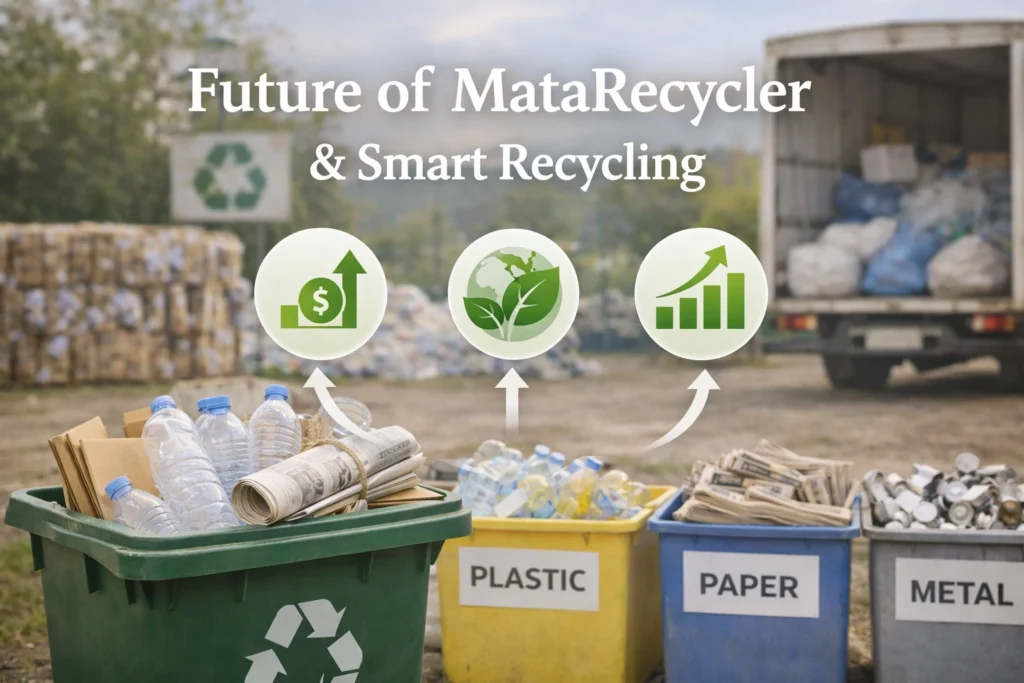
The future of matarecycler looks promising, driven by advancements in AI, IoT, and data analytics. As these technologies evolve, the system will become even more intelligent, efficient, and scalable.
AI Advancements
Machine learning models will become better at identifying materials, including new and mixed types of waste. Over time, matarecycler will adapt to emerging packaging trends and changing consumption habits, maintaining high accuracy without manual intervention.
Integration with Smart Cities
As cities continue to embrace IoT and smart infrastructure, matarecycler will integrate more seamlessly with other systems, traffic management, energy grids, and water treatment, creating holistic urban sustainability solutions.
Blockchain & Transparency
Blockchain technology could play a role in creating a transparent waste management system. By tracking each item through the recycling process, stakeholders can verify the origin, processing, and destination of materials, increasing accountability and trust.
Conclusion
MataRecycler represents a transformative step in waste management. By combining artificial intelligence, automation, and data analytics, it addresses the inefficiencies of traditional recycling systems and supports sustainable practices.
Its real-world applications, from smart cities to industrial plants and community programs, demonstrate its versatility and impact. While challenges like cost and adoption exist, the long-term benefits in environmental sustainability, economic efficiency, and operational excellence are undeniable.
Ultimately, matarecycler is more than technology, it’s a paradigm shift in how we view waste. By treating waste as a resource rather than a problem, we can move toward a future where recycling is smarter, cleaner, and more sustainable.
FAQs
What is MataRecycler in simple terms?
MataRecycler is a smart recycling system that uses AI, sensors, and automation to identify, sort, and process waste more efficiently than traditional methods.
How does MataRecycler improve recycling efficiency?
It reduces human error, speeds up sorting, monitors waste in real time, and adapts to new materials through machine learning, ensuring more materials are recycled correctly.
Is MataRecycler a physical system or a concept?
It can be both, a set of smart devices like bins and sorting machines, and an overarching strategy or system for managing waste intelligently.
Who can use MataRecycler technology?
Municipalities, businesses, industries, educational institutions, and communities can implement it to improve recycling and sustainability efforts.
What are the main benefits of smart recycling systems?
Environmental benefits (less landfill waste, lower carbon footprint), economic benefits (cost savings, resource reuse), and operational benefits (efficiency, real-time monitoring).
Is MataRecycler suitable for small businesses?
Yes. While initial costs exist, small businesses can scale the system according to their needs and benefit from improved recycling and cost efficiencies.
📌Good read? Better ones are coming, follow AI Mastars.